Picking the right massage bed manufacturer or supplier in China isn’t just about comparing factory prices — there’s more to the story. You want a partner you can trust, someone with real manufacturing experience, solid quality control, and good communication. Look for companies that have detailed material specs, consistent upholstery standards, and records you can trace back to inspections. A professional supplier shouldn’t hesitate to explain technical stuff like foam density, frame construction, weight capacity, motor performance, and surface durability — no secrets kept. Ask for factory videos, sample units, test reports, and recent export references; paying attention to those small details really pays off.
A dependAble Massage bed should stay stable even after many adjustments and support comfortable positioning for those long treatment sessions. Make sure to check how sturdy the hinges are, the locking mechanisms, cable protection, hand controls, and how easy it is to clean. Sure, certifications help establish credibility, but don’t just rely on those — they should match the actual product and target market. Honestly, a certification alone doesn’t prove much. Factory audits, sample testing, and clear warranty terms are stronger proof that you’re dealing with a legit supplier. Also, be cautious if a company promises customizations way too easily but their engineering team doesn’t seem experienced enough — that’s a red flag.
Top manufacturers usually provide clear drawings, quick after-sales support, spare parts availability, and realistic production timelines. They should also discuss how they pack, load, and protect the beds during shipping because damage can happen. When buying, don’t just look at the initial price — think about the total ownership cost. A cheaper Massage Bed might end up costing you more in repairs, delays, or dealing with inconsistent quality. Even seasoned buyers can overlook these risks without doing proper vetting, so it’s worth taking the time to double-check.
This guide covers key aspects like manufacturing capabilities, product design, certifications, customization options, pricing, and overall reliability of suppliers. Whether you’re an importer, distributor, clinic, or wellness business, it’ll help you make smarter, more confident decisions.
The global Massage Bed market is expanding with wellness clinics, rehabilitation centers, and home therapy demand. Recent industry estimates place its 2024 value nearUSD 1.5–2.0 billion. Forecasts commonly indicate a 6%–8% CAGR through 2030. However, reported figures differ by product scope and regional coverage.
China remains a major manufacturing base for electric, hydraulic, portable, and Water Massage Bed systems. Suppliers typically offer OEM or ODM production, adjustable sections, heating functions, and wipe-clean upholstery. Buyers should inspect motor noise, lifting stability, foam density, and frame welding.
Supplier quality varies widely. Experienced factories usually provide material specifications, load testing records, sample approval, and spare-parts support. Ask for production photographs and independent inspection results. Do not rely only on polished catalogs. Lead times may range from several weeks to multiple months, depending on customization and order volume. Certification requirements also differ across destination markets, so documentation should be checked before shipment.
Massage Bed design should match treatment movement, not just appearance. A 2-section bed supports a stable backrest and a simple working position. It suits massage, consultation, and compact rooms. A 3-section model adds a movable leg or seat section. This helps practitioners adjust posture, reduce knee strain, and support clients with different body shapes. In practical fitting, small changes matter. A bed that feels “almost right” may still create pressure after an hour.
Width also changes the working experience. Beds between 70 and 76 cm offer a useful balance between client comfort and therapist access. A 70 cm bed can save space in narrow rooms. A 76 cm bed may feel more secure for larger clients, but it requires longer reaches. The American Massage Therapy Association’s 2023 industry research reported that 21% of U.S. adults received a massage during the measured year. That demand supports flexible equipment, though the figure does not prove that wider beds perform better. Evidence remains limited.
Tips: Check the bed width with the armrests removed. Measure the folded height and working height. For a Hydro Massage Bed, confirm water capacity, cleaning access, and electrical protection. Test the control panel with wet hands only if the manufacturer permits it. Ask suppliers for load testing, upholstery specifications, warranty terms, and replacement-part timelines. Do not trust impressive weight ratings alone. Their testing conditions may differ from daily clinic use.
When comparing Massage Bed manufacturers and suppliers in China, examine the load rating carefully. A 250 kg rating usually describes the maximum static load, not every working condition. It may include the client, therapist’s pressure, and attached equipment. Ask whether the figure applies to the entire bed or only the frame.
A 350 kg capacity offers more room, but it does not automatically mean better safety. A useful safety margin protects against movement, uneven weight, repeated adjustment, and aging materials. For regular professional use, buyers should request test records, loading methods, cycle results, and material specifications. Short documents are not enough. Details matter.
During a practical inspection, check the joints, hinges, cables, padding base, and leg locks. A bed can look solid while its weakest connection remains poorly reinforced. That is an easy mistake to miss. Also, do not confuse static capacity with dynamic capacity. A client turning over creates different stress from a motionless load. Suppliers should explain this difference clearly and provide traceable quality records.
The stated rating should match real working conditions. Consider the heaviest expected client, therapist pressure, accessories, and repeated daily use. A 250 kg bed may suit lighter service demands, while a 350 kg model can provide greater tolerance. Still, excessive capacity can increase weight and reduce portability. The best choice depends on verified testing, construction quality, and honest technical communication.
Electric Massage Beds are becoming more adjustable, but motor count should match real treatment needs. A 2024 Grand View Research report forecasts growth above 7% for the global massage equipment market through 2030. That trend reflects demand for flexible professional equipment, not simply more buttons.
One motor usually controls height and suits basic studios. Two motors can separate backrest and legrest movement. Three motors may add tilt or independent head adjustment. Four motors offer finer positioning for longer treatments, but complexity increases. More parts can mean more maintenance.
Height range matters every day. A 600–750 mm adjustment range helps therapists work while seated or standing. At 600 mm, a therapist can access a client’s back with less shoulder lifting. At 750 mm, taller practitioners may reduce forward bending. The ideal setting still depends on body height, technique, and mattress thickness. It is not universal.
A Portable Massage Bed with electric adjustment needs more than a compact frame. Check rated working load, motor duty cycle, wheel stability, cable routing, and emergency lowering. Pinch points deserve attention. A 2023 market analysis by IMARC Group identifies product safety and ergonomic design as important purchasing factors in massage equipment. That sounds obvious, yet buyers often compare motor numbers before checking service access. A quieter motor is useful, but a poorly supported bed remains a poor investment.
The chart presents the stated Electric Massage Bed configuration range without using company or brand data. The available height-adjustment specification is 600–750 mm, while configurations range from one to four motors.
Lower and upper bars represent the 600 mm minimum and 750 mm maximum height-adjustment limits across the 1–4 motor configurations.
For China’s best massage bed manufacturers and suppliers, upholstery choice affects hygiene, comfort, and service life. PU feels softer and warmer, while PVC usually resists oils, sweat, and frequent wiping better. The International Association of Healthcare Central Service Materiel recommends following the disinfectant’s full contact time. A surface wiped too quickly may look clean but remain inadequately treated. Choose closed-cell or tightly coated upholstery with sealed seams. Creased stitching can trap massage oil, skin flakes, and moisture.
Foam density needs careful interpretation. The Polyurethane Foam Association explains that density measures foam weight per cubic foot, not firmness. A dense cushion can still feel uncomfortable if its firmness is poorly matched. For regular clinics, medium-to-high density foam often supports repeated compression better than lightweight foam. I would not treat a high number as proof of quality. That assumption needs checking. ASTM D3574 provides standardized tests for flexible polyurethane foam, including compression and resilience. Ask suppliers for test results, recovery performance, and thickness after repeated use. For a Bed Massage Portable model, inspect the folded frame, hinge area, and edge foam. These parts suffer first. A 2023 hygiene review from the CDC stresses cleaning before disinfection when soils are visible. Practical details matter: wipeable PU or PVC, removable headrest covers, and documented cleaning instructions. Suppliers should also state abrasion results, chemical resistance, and warranty limits clearly.
| Evaluation Dimension | Standard PU Upholstery | High-Performance PU Upholstery | Standard PVC Upholstery | High-Performance PVC Upholstery |
|---|---|---|---|---|
| Typical surface construction | Polyurethane coating on a textile backing | Multi-layer PU with reinforced textile backing and protective topcoat | Polyvinyl chloride coating on a knitted or woven backing | Thicker PVC compound with antimicrobial or protective topcoat, subject to supplier validation |
| Common upholstery thickness | Approximately 0.8–1.2 mm | Approximately 1.0–1.5 mm | Approximately 0.8–1.2 mm | Approximately 1.0–1.5 mm |
| Water and oil resistance | Good water resistance; prolonged oil or solvent exposure may damage the coating | Very good resistance when the topcoat is properly formulated and sealed | Very good resistance to water and many oil-based contaminants | Excellent resistance for frequent wipe-down use, depending on formulation |
| Breathability and user comfort | Usually more breathable and softer than PVC | Typically combines improved comfort with better surface protection | Low moisture vapor permeability; may feel warmer during long treatments | Low to moderate breathability; perforation or engineered backing may improve comfort |
| Recommended foam density | 28–35 kg/m³ for general massage use | 35–45 kg/m³ for heavier commercial use | 28–35 kg/m³ for general massage use | 35–45 kg/m³ for high-frequency clinics and wellness facilities |
| Recommended foam firmness | Medium-soft to medium; approximately 2.5–4.0 kPa compression firmness | Medium to firm support; approximately 3.0–5.0 kPa | Medium-soft to medium; approximately 2.5–4.0 kPa | Medium to firm support; approximately 3.0–5.0 kPa |
| Seam and edge requirements | Double-stitched or reinforced seams; rounded edges reduce coating stress | Reinforced seams, bonded stress points, and protected underside recommended | Heat-welded or tightly stitched seams help limit liquid penetration | Welded or sealed seams are preferred for intensive cleaning routines |
| Cleaning compatibility | Use neutral detergent and a damp cloth; avoid unapproved alcohol, bleach, and strong solvents | May tolerate approved disinfectants better, but chemical compatibility must be confirmed by test data | Generally easy to wipe clean; repeated exposure to harsh chemicals can cause cracking or tackiness | Designed for more frequent disinfection when the supplier provides validated chemical-resistance data |
| Hygiene design priorities | Non-porous surface, sealed seams, removable cover, and rapid drying after cleaning | Non-porous surface, antimicrobial claim supported by testing, sealed seams, and replaceable cover | Non-porous surface and welded or sealed seams; avoid textured surfaces that retain residue | Smooth, sealed, low-porosity surface with documented disinfectant compatibility |
| Abrasion and flex performance | Suitable for light to moderate use; request Martindale or equivalent test results | Better resistance to flexing and abrasion when reinforced; request test reports before purchase | Good abrasion resistance; plasticizers and frequent folding can affect long-term performance | Very good abrasion and flex resistance when the compound and backing are commercial-grade |
| Typical service-life target | Approximately 3–5 years under regular indoor use and correct maintenance | Approximately 5–8 years under regular commercial use, subject to cleaning chemicals and workload | Approximately 4–7 years under regular indoor use and controlled maintenance | Approximately 6–10 years under suitable indoor conditions and validated cleaning procedures |
| Best purchasing evidence | Material specification, foam density report, seam sample, cleaning instructions, and abrasion test | Material specification, chemical-resistance test, foam report, abrasion/flex test, and production sample | PVC composition specification, seam sample, cleaning instructions, and abrasion test | Chemical-resistance report, antimicrobial test if claimed, foam report, weld/seam sample, and warranty terms |
Reference note: Values are typical specification ranges for professional massage and treatment beds, not guaranteed values for every product. Final selection should be based on supplier test reports, actual upholstery samples, cleaning-agent compatibility data, foam testing to applicable standards such as ASTM D3574 or ISO 3386-1, and the intended workload.
Choosing among China’s best massage bed manufacturers and suppliers requires more than comparing catalog photos. A supplier audit should begin with ISO 9001 evidence, including the certificate number, scope, issuing body, and expiration date. The ISO Survey 2022 recorded more than 1.26 million ISO 9001 certificates worldwide, showing its broad use as a quality framework. It does not guarantee every bed is excellent. Request recent factory records, incoming-material checks, load testing, and corrective-action reports. A factory tour, even by video, can reveal crowded storage and weak process control.
CE marking needs careful review because it is a conformity declaration, not a universal quality award. Ask which EU directives apply to powered adjustment systems, adapters, and electrical controls. For electronic parts, request RoHS test reports with product codes and laboratory details. Test reports should match the exact model, not a similar sample. Be cautious here.
MOQ affects cash flow. A realistic opening order might range from 10 to 100 units, depending on customization and packaging. Confirm whether spare parts count toward MOQ. Lead time should separate sample production, mass production, inspection, and shipping. Written schedules are stronger than sales promises. For warranty terms, verify coverage for motors, upholstery, frames, and labor. A 12-month warranty may sound standard, but response time matters more. Ask for failure-rate data and replacement procedures. Some suppliers provide documents quickly, yet delay basic evidence. That gap deserves reflection.
Comparing Chinese massage bed manufacturers requires more than checking the lowest quotation. Ask for a detailed cost sheet covering the frame, padding, upholstery, motor, packaging, and shipping terms. A very low price may hide thinner steel, weaker hinges, or inconsistent foam density. I have seen attractive samples fail when tested repeatedly. That experience still makes me cautious.
Quality should be measured, not promised. Request material specifications, load-test results, welding photos, and inspection records. Check whether the factory controls production directly or uses several unknown subcontractors. Order a sample and examine its stability, surface finish, height adjustment, and noise level. Test it with realistic pressure. Small defects often appear after regular use. Supplier references can help, but they are not perfect evidence.
Tips: Compare at least three quotations using the same specifications. For OEM projects, send clear drawings, dimensions, logo files, color codes, and packaging requirements. Confirm mold charges, minimum order quantities, revision fees, production time, and spare-part support in writing. A reliable supplier should explain what can be customized and what cannot. Third-party inspections may add cost, yet they can reduce expensive surprises. Do not judge quality from photographs alone.ҟ
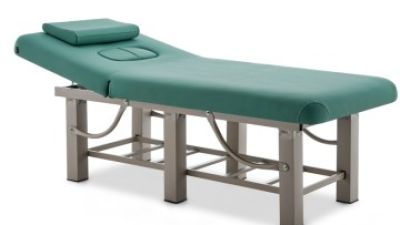
Choosing a durable beauty bed for manicure and physiotherapy massage services begins with examining its frame and overall construction. A metal frame provides reliable support and stability for regular professional use, while a fixed headrest can offer consistent positioning during treatments. The modern design is suitable for beauty rooms, bedrooms, hotels, hospitals, gyms, and villas, making it a practical choice for businesses serving different customer needs. High-quality construction is especially important when the bed is used frequently or shared by many clients.
Consider the bed’s adaptability to your business image and purchasing plan. Suppliers may offer customized logos, packaging, and graphics with a minimum order of 20 pieces, along with minor, drawing-based, sample-based, or full customization services. These options allow salons, massage centers, and wellness facilities to create a more consistent professional appearance while ordering equipment in bulk.
For budget planning, the listed price is $60 per piece for orders of 4–99 pieces and $58 per piece for orders of 100 pieces or more. Before purchasing, compare the metal frame, fixed headrest, customization requirements, and intended service environment to ensure the beauty bed matches both daily treatment demands and long-term operational needs.
The market was estimated at about USD 1.5–2.0 billion in 2024. Figures vary by product coverage.
Many forecasts suggest a 6%–8% CAGR through 2030. Treat this range carefully because reports use different methods.
China produces electric, hydraulic, portable, and water-based massage beds. Suppliers often support OEM and ODM customization.
Check motor noise, lifting stability, frame welding, foam density, and load performance. Small defects become obvious during daily treatment.
PU feels softer and warmer. PVC usually handles oils, sweat, and frequent cleaning better.
Choose sealed seams and tightly coated upholstery. Clean visible soil before disinfection, then follow the disinfectant’s full contact time.
No. Density measures foam weight, not firmness. A dense cushion can still feel wrong for patients or therapists.
Request material specifications, load-testing records, sample approval, inspection results, and spare-parts information. Catalog photos are not enough.
Check the ISO 9001 certificate number, scope, issuer, and expiration date. For electrical parts, verify model-specific compliance reports.
Confirm order quantities, customization limits, sample timing, production time, inspection, and shipping. Written schedules are safer than promises.
Review coverage for motors, frames, upholstery, labor, and replacement parts. Response time may matter more than a twelve-month term.
Inspect hinges, folded frames, edge foam, and locking points. These areas often suffer first, although this assumption needs checking.
China’s Massage Bed manufacturing sector offers a wide range of options for clinics, spas, rehabilitation centers, and distributors. Buyers can choose from 2-section and 3-section designs, widths of approximately 70–76 cm, and load capacities commonly ranging from 250 to 350 kg with suitable safety margins. Electric models may include one to four motors, supporting smooth height adjustment between about 600 and 750 mm. Upholstery choices such as PU or PVC, combined with appropriate foam density, affect comfort, cleaning efficiency, and long-term durability.
When comparing suppliers, purchasers should review quality systems, CE and RoHS documentation, production capability, minimum order quantities, lead times, warranty terms, and inspection procedures. A reliable supplier should communicate clearly, maintain consistent quality, and provide practical OEM support for structure, colors, accessories, and packaging. The best purchasing decision should balance price with material performance, safety, customization ability, after-sales service, and delivery reliability rather than focusing only on the lowest quotation.